Building your own melamine tableware factory puts you in full control of product design, molding parameters, batch quality, custom orders and production schedules.
However, launching a manufacturing facility requires careful capital budgeting, reliable raw material supply, proper equipment configuration, strict quality control and global food safety compliance. Every decision you make around melamine powder grade, mould design and machine setup directly impacts your defect rate, certification status and ability to win long-term bulk orders.
1. Market Research & Product Positioning
Clear market positioning helps you select the right melamine grade, product lines and certification packages before investing in workshop, machines and moulds.
- First, define your target sales market. Export destinations enforce different compliance requirements: the US market requires FDA compliance; EU customers demand LFGB certification; while local sales must follow regional food contact standards. High-demand export regions include Southeast Asia, the Middle East, Europe and South America.
- Next, finalize your product portfolio. Common product lines for melamine factories include heavy-duty hotel tableware, children’s melamine dinner sets, school catering plates, decal printed ware and thick commercial melamine tableware. Each category has unique thickness requirements, surface treatment options and price positioning.
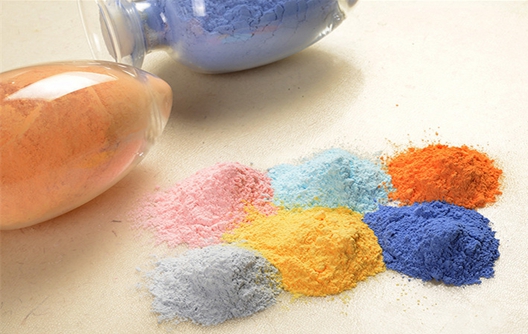
- Then, material grade selection is non-negotiable for food contact melamine products. Always specify A5 food grade melamine powder for tableware production. A5 melamine molding compound meets strict formaldehyde migration limits, while cheaper low grade or recycled powder carries major food safety risks and will fail international food safety tests.
- Lastly, complete competitor benchmarking before locking your factory product plan. Analyze competing manufacturers’ pricing, certification packages, customization capacity, production capacity and typical lead times to identify your market niche.
2. Budget & Financial Planning
Factory investment covers workshop renovation and ventilation setup, hydraulic molding presses, preheating machines, edge grinders and custom product moulds. All equipment must be selected to match your product size and daily output targets.
Additional expenses include melamine powder inventory, color paste, decal paper, QC lab equipment, labour wages, utility bills, machine maintenance and certification testing fees.
Plan your raw material purchasing cycles carefully and reserve working capital for bulk melamine powder orders. Set aside contingency funds for machine breakdown maintenance, batch testing and unexpected buyer audit costs. Always align production schedules and lead times with customer delivery deadlines to reduce cash flow pressure.
3. Supply Chain & Melamine Raw Material Sourcing
Melamine powder quality is the factor that determines food safety, finished product appearance and compliance status for your entire factory output.
Food grade melamine molding compound must have stable flowability, consistent curing speed and controlled formaldehyde migration performance. Even minor batch variation in melamine powder can trigger molding defects and certification failures for your finished tableware.
Before confirming raw material and machinery suppliers, complete formal supplier audits. Conduct factory visits, request batch sample testing, verify material stability and validate all certification documents against the actual production raw material batches.
4. Global Food Contact Certifications & Compliance
Valid food contact certification is mandatory for export melamine tableware and must match the exact melamine powder batch used for mass production.
Major global standards include FDA (USA), LFGB (Germany), and GB 4806.7 (China food contact standard). International buyers and customs authorities regularly audit these documents.
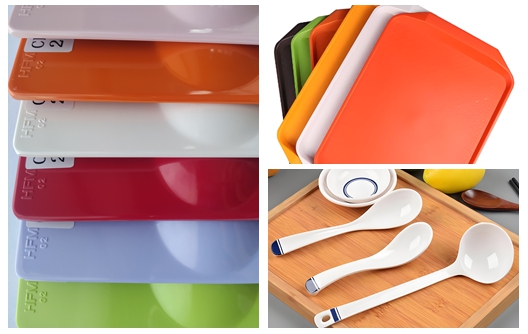
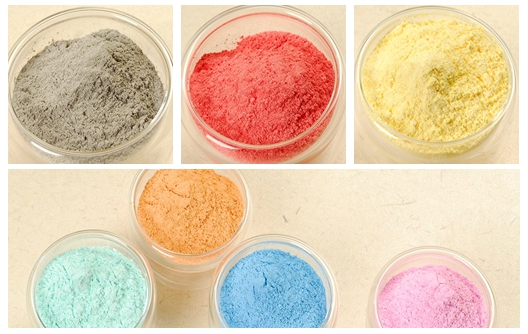
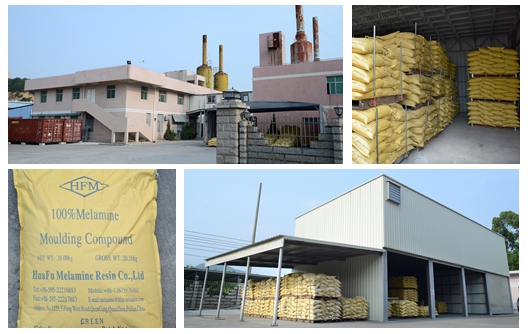
Huafu factory boasts over 20 years of specialized melamine formaldehyde moulding compound production experience, serving hundreds of melamine tableware manufacturers globally. We fully understand the critical connection between melamine powder performance and your finished tableware’s molding stability, surface finish and food-contact certification results. Our technical team can assist new factory owners in powder grade selection, color matching, and molding parameter optimization and compliance documentation preparation.
Real Case Study
This real case from our melamine powder client shows how a new melamine tableware factory avoided costly mistakes.
A newly built melamine tableware factory in India planned to supply hotel and restaurant customers. To save initial material costs, the production team first sourced cheap non-food-grade melamine powder for trial production.
Their trial tableware samples failed LFGB testing due to excessive formaldehyde migration. The team learned that low-cost powder could not meet EU food safety standards. If they had proceeded to mass production, the full shipment would have been rejected by customs, resulting in heavy financial losses.
They switched to use Huafu Brand A5 food grade melamine powder and established mandatory incoming raw material inspection. They applied for full LFGB and FDA certification matching their bulk powder batch, and optimized powder preheating procedures to lower product defect rates.
The revised samples passed buyer factory audits. The factory secured repeat hotel bulk orders and successfully avoided product recall.
For manufacturers in the tableware industry, this example highlights the value of investing in high-quality raw materials and proactive quality control measures. The lesson here is clear: short-term cost savings should never compromise long-term success and customer safety.
If you need technical data sheets, melamine powder samples or professional production support for your melamine tableware factory project, contact Huafu sales representative – Ms. Shelly Chen via Email: melamine@melaminecn.com.
Post time: Oct-15-2026